
The Honest AI Adoption Roadmap for Growing Businesses
After helping dozens of companies integrate AI, here's what actually works, and the common traps that waste budget and momentum.
The Hype Gap
There's a gap between AI's theoretical potential and what growing businesses actually need. On one side: vendors promising transformational outcomes, analyst reports projecting trillion-dollar impacts, and LinkedIn feeds full of AI use cases from companies with 500-person engineering teams. On the other side: a marketing director trying to figure out if AI will actually help her team, a COO wondering if the investment is worth it, a CTO nervous about where to start.
We've been on both sides of this conversation across 20+ years of software delivery. This post is the honest version of the AI adoption roadmap, not the one that sells consulting engagements, but the one we give clients who ask us to be straight with them.
Where to Actually Start
The best first AI project is boring. It is a high-frequency, low-stakes, well-defined task that your team currently does manually. Not 'build a strategy advisor chatbot.' Something like: 'automatically classify incoming support tickets into the right department' or 'generate first drafts of weekly status reports from project management data.'
Why boring? Because boring tasks have clear success criteria (is the classification right? yes/no), predictable inputs (the same types of tickets come in every week), and low risk if the AI gets it wrong (a misclassified ticket gets rerouted, not a catastrophe). Success on a boring task builds team confidence, demonstrates ROI concretely, and creates the organizational muscle memory for AI workflows before the stakes get higher.
💡Finding Your Best First Project
Ask your team: 'What task do you do every week that feels like it should be automated by now?' The thing that makes everyone groan, that's usually your best first AI project. It has volume, it has pain, and it has a clear definition of 'done right.'
Three Traps That Kill AI Projects
Trap 1: Starting with the technology, not the problem. 'We want to build a RAG system' is not a project brief. 'Our support team spends 30% of their time answering questions that are already in our documentation' is a project brief. The technology is determined by the problem, not the other way around.
Trap 2: Skipping the data audit. AI systems are only as good as the data they're trained or grounded on. We have seen projects fail because the 'documentation' the client wanted to use for a knowledge assistant was 40% outdated, contradictory, and stored in six different formats across three platforms. Before committing to an AI project, audit your data honestly.
Trap 3: No owner. AI projects without a clear internal owner, someone who cares about the outcome, has authority to make decisions, and will champion adoption, fail at the deployment stage. The technology works; the organizational change doesn't. Every successful AI project we've shipped has had a passionate internal owner who drove adoption on their side.
The Proof-of-Concept Approach
We recommend every AI engagement start with a 4–6 week proof of concept before any production commitment. The PoC should: use a real subset of your actual data (not synthetic), be evaluated by the people who will actually use it (not just leadership), and measure the thing that actually matters for the use case (not generic 'accuracy').
A PoC is not a pilot, it is an architectural and feasibility test with a real success/fail decision at the end. If the PoC demonstrates that the problem is solvable at acceptable quality and cost, you proceed. If it reveals that the data isn't good enough, the problem is harder than anticipated, or the ROI math doesn't work, you've spent 6 weeks finding out, not 6 months.
Measuring ROI Honestly
AI ROI has two components most people account for and one that most don't. Time saved and quality improvement are the obvious ones. The one people miss is the ongoing cost: LLM API costs, infrastructure, monitoring, and, critically, the time required to maintain the system as your data and processes change.
A rough framework: take the fully-loaded cost of the human time the AI replaces, subtract the total cost of ownership of the AI system (build + run + maintain), and net that over 12 months. If the ratio is better than 3:1 in year one, the project is worth doing. Most well-scoped AI automations hit 5:1 or better, but they require honest accounting of all four cost categories.
Conclusion
AI adoption done well is boring, methodical, and incremental, which is exactly why it works. Start with a high-frequency, low-stakes problem. Audit your data first. Build a real PoC with real success criteria. Measure ROI honestly. Find an internal champion. None of this is glamorous, but all of it is what separates the companies that see genuine returns from AI from the ones that announce initiatives and then quietly shelve them.
Related Projects
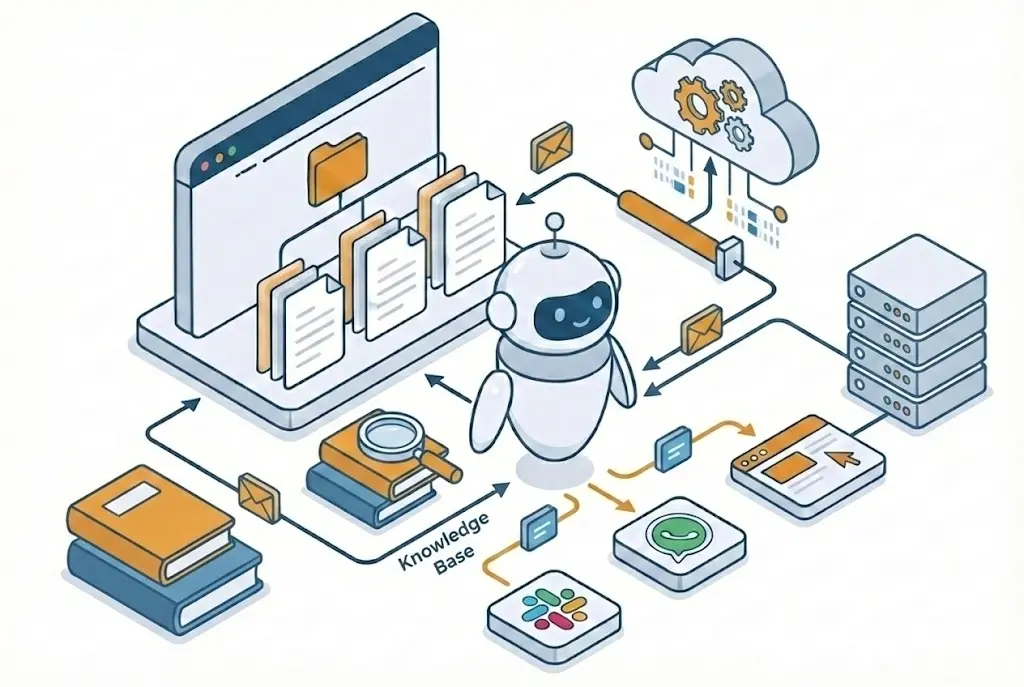
Agentic Knowledge Assistant
An LLM-powered, multi-channel assistant that uses Retrieval-Augmented Generation (RAG) to autonomously answer employee o...

Autonomous Content-to-Learning Engine
An AI system that ingests PDFs, videos, or documents and autonomously creates assessments, flashcards, and learning summ...
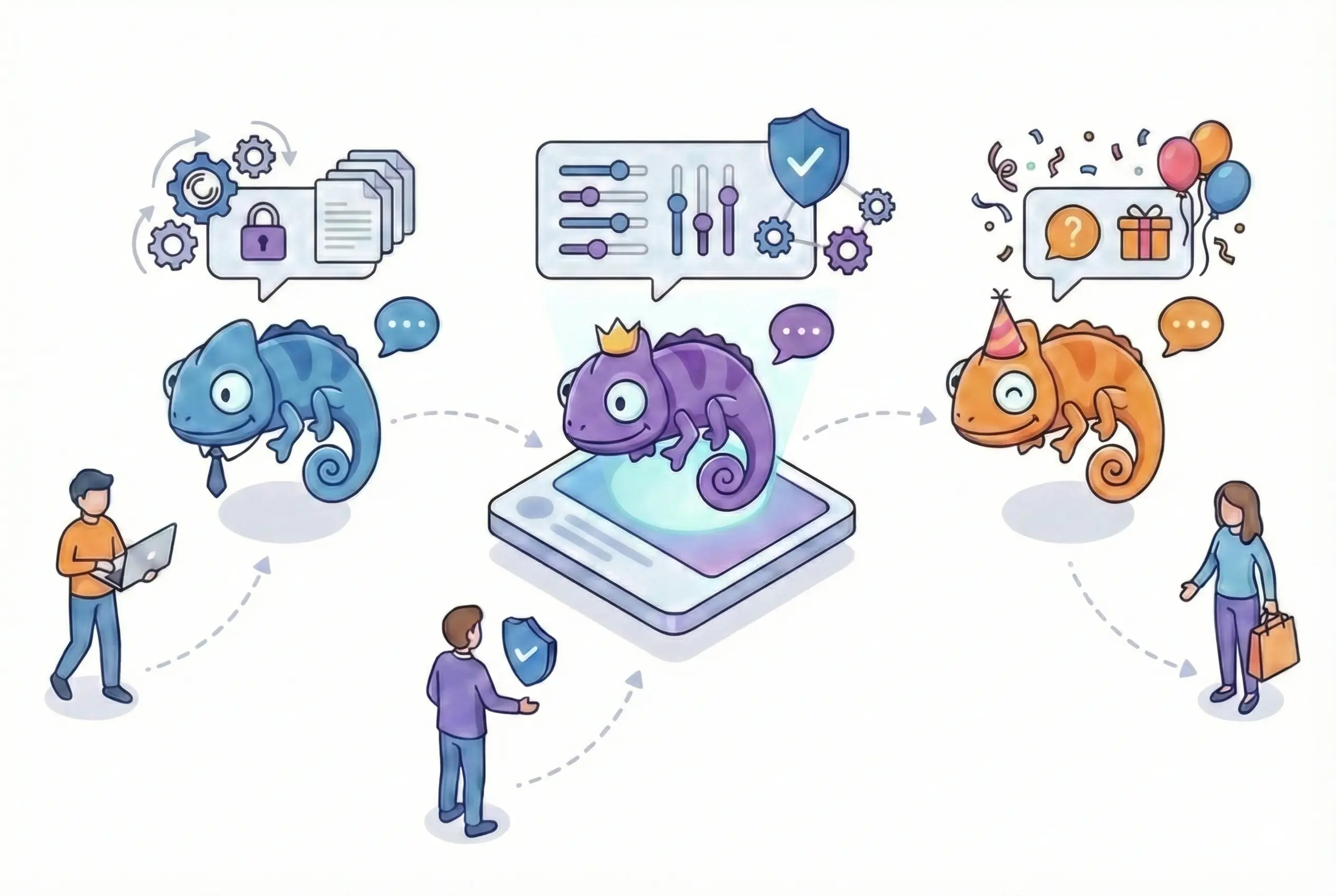
Embeddable Role-Aware Chat Widget
A lightweight AI widget that plugs into any platform and adapts answers dynamically based on user role and platform cont...