
From PDF to Quiz in 60 Seconds: Building an AI Content-to-Learning Engine
How we automated the creation of assessments, flashcards, and learning summaries from raw training documents, and cut content team workload by 80%.
The Problem
L&D teams are drowning. A single compliance training update can require rewriting dozens of assessments across multiple platforms. A new product launch means new onboarding modules, quizzes, and reference cards, all created manually by instructional designers who are already at capacity.
We've spent years in the EdTech space, working with companies like Lexia Learning, Cengage, and Blackboard, and the content creation bottleneck is universal. The documents exist. The knowledge is there. The problem is the extraction and structuring pipeline from raw content to interactive learning material.
Pipeline Overview
Our Autonomous Content-to-Learning Engine takes a document (PDF, DOCX, video transcript, or plain text) and produces a structured learning package: a summary, a set of flashcards, and a quiz with multiple-choice and short-answer questions, in under 90 seconds for a typical 20-page document.
The pipeline has four stages: Document Parsing → Concept Extraction → Content Generation → Format Output. Each stage is independently configurable, so clients can swap in their own parsers, tune the extraction model, or plug into a custom output format for their LMS.
Key Concept Extraction
The hardest part of the pipeline isn't generation, it's extraction. LLMs are excellent at generating fluent text; they're much less reliable at identifying which specific facts from a document are worth testing. A naive approach ('list the key concepts in this document') produces generic, surface-level results.
Our approach uses a two-pass extraction strategy. In the first pass, we use a lightweight model to segment the document into semantic units and assign a 'testability score' to each unit based on heuristics: specificity of language, presence of defined terms, procedural steps, numerical facts. In the second pass, we send the highest-scoring units to a more capable model with a structured extraction prompt that produces concept triples: term, definition, context sentence.
💡Improving Extraction Quality
Ask your LLM to extract concepts as if it were writing a glossary for a new employee on their first day. This framing produces more grounded, practical extractions than asking for 'key concepts' or 'main ideas', which tends toward abstraction.
Assessment Generation
With a clean set of concept triples, assessment generation becomes reliable. We use separate prompt templates for each question type. For multiple-choice, we include the concept triple plus three distractor-generation instructions: one distractor that is a common misconception, one that is a related-but-incorrect term from the same document, and one that is plausible but clearly wrong.
Flashcards are generated directly from concept triples with front/back formatting. Summaries use a hierarchical summarization approach: section-level summaries are generated first, then aggregated into a document-level summary. This prevents the LLM from losing track of early sections in long documents.
def generate_mcq(concept: dict, context: str, llm) -> dict:
    prompt = f"""
    Generate a multiple-choice question for this concept:
    Term: {concept['term']}
    Definition: {concept['definition']}
    Context: {context}

    Requirements:
    - Question should test understanding, not memorization
    - Include 4 options (A-D), one correct
    - Distractor 1: common misconception about this term
    - Distractor 2: a related but distinct term from the content
    - Distractor 3: plausible but clearly incorrect

    Return JSON with: question, options, correct_answer, explanation
    """
    return llm.invoke(prompt, response_format="json")
LMS Integration
Generated content is exported in three formats: QTI 2.1 (the eLearning interoperability standard supported by Moodle, Canvas, Blackboard, and most enterprise LMS platforms), a JSON format for custom integrations, and a human-readable HTML preview for review before publishing.
Our QTI exporter handles the nuances that generic exporters miss: proper encoding of mathematical expressions, image references with alt text, accessibility metadata, and item bank organization by topic. For clients on Moodle specifically, we have a direct API integration that publishes directly to a question bank.
Results & Impact
Across three deployments, we consistently see content team time-to-publish drop by 78–83% for standard training module updates. Instructional designers shift from creating questions to reviewing and curating AI-generated questions, a much higher-value use of their expertise.
Assessment quality, measured via item analysis after student completion (discrimination index, difficulty index), is comparable to manually authored questions. The AI tends to produce slightly easier questions on first pass; our calibration layer addresses this by targeting a target difficulty distribution configured per course type.
Related Projects
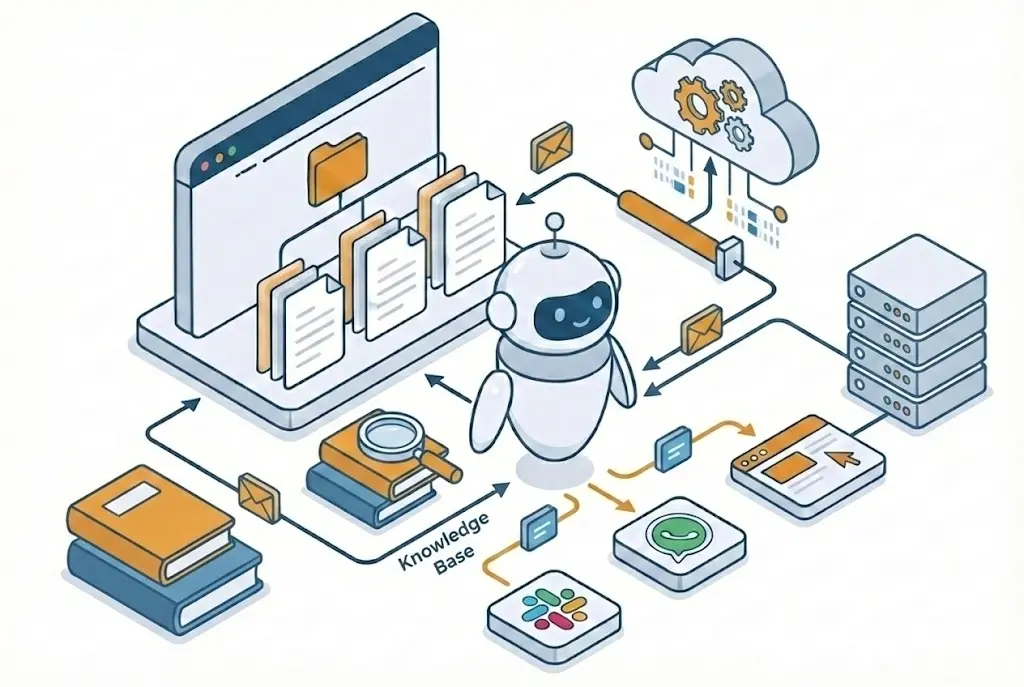
Agentic Knowledge Assistant
An LLM-powered, multi-channel assistant that uses Retrieval-Augmented Generation (RAG) to autonomously answer employee o...

Autonomous Content-to-Learning Engine
An AI system that ingests PDFs, videos, or documents and autonomously creates assessments, flashcards, and learning summ...
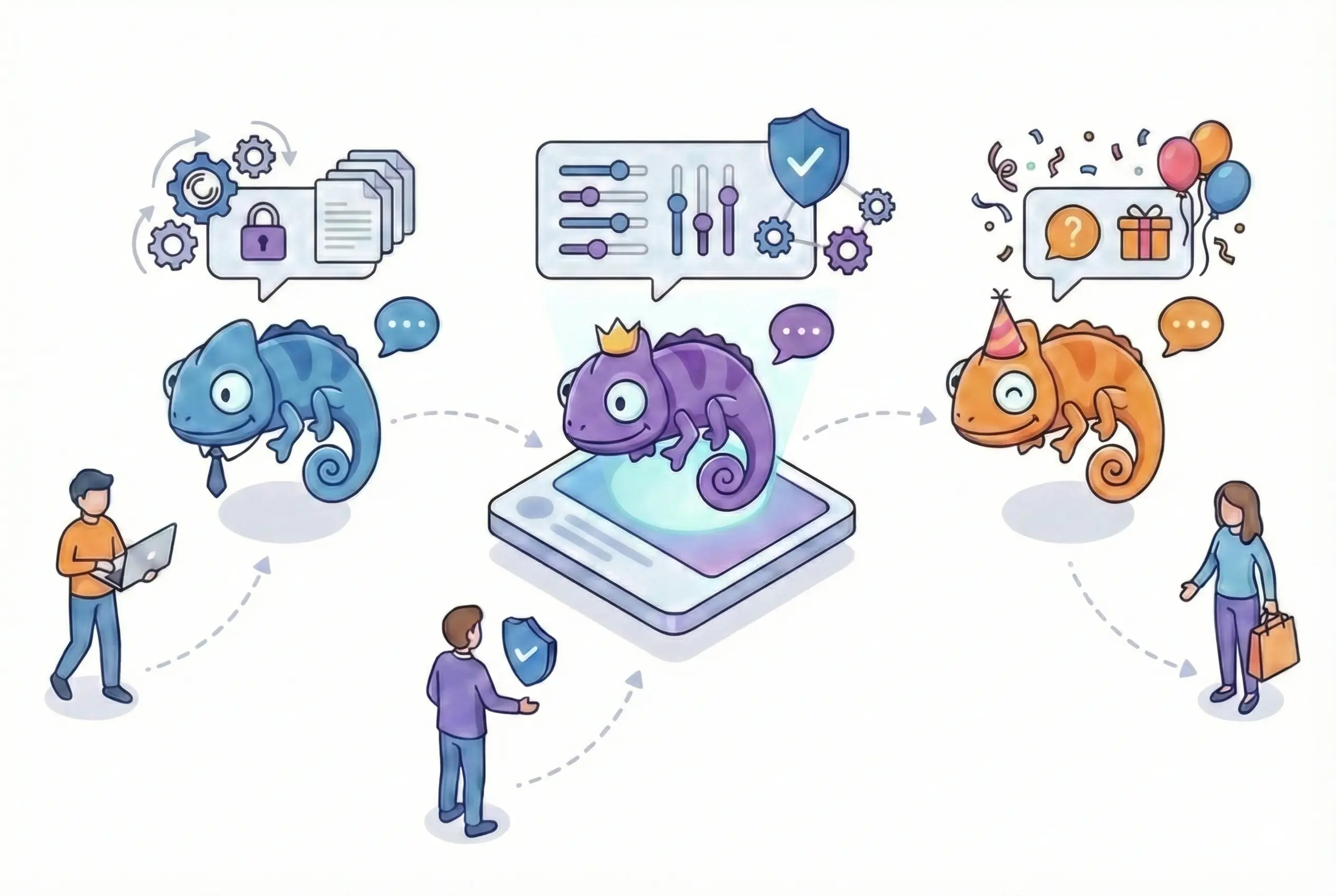
Embeddable Role-Aware Chat Widget
A lightweight AI widget that plugs into any platform and adapts answers dynamically based on user role and platform cont...