
Never Write API Docs Again: Autonomous Documentation with LLM Agents
How we built an AI agent that crawls codebases, detects endpoint changes, and keeps API documentation continuously in sync, eliminating one of the most tedious dev tasks.
The Stale Docs Problem
API documentation has a half-life. The moment an endpoint is documented, the clock starts ticking toward the point where the docs no longer match the code. In fast-moving teams, that half-life can be measured in days. Developers stop trusting the docs, start reading the source code directly, and the docs become a liability rather than an asset.
Manual documentation requires discipline that is difficult to maintain under shipping pressure. Automated documentation tools exist but tend to produce mechanical, low-quality output that misses context, misrepresents complex behaviors, and requires significant cleanup. Our Agent-Powered API Docs Sync takes a different approach: an LLM agent that understands the code, not just its syntax.
Agent Design
The agent runs as a CI/CD step triggered on every merge to main. It has four tools: read_file (accesses any file in the repository), search_codebase (semantic search over the codebase for relevant implementation context), read_existing_docs (retrieves the current documentation for comparison), and write_doc_update (proposes documentation changes as a PR diff).
The agent operates in a loop: it first identifies all changed endpoints by diffing the current branch against the previous documented state. For each changed endpoint, it reads the implementation, retrieves any relevant context (related models, validators, middleware), compares against existing docs, and generates a proposed update. Changes are staged as a PR for developer review, the agent proposes, humans approve.
Codebase Parsing
The agent needs to understand code, not just read it. For each endpoint, we extract: the route definition, HTTP method, path parameters, query parameters, request body schema (from type annotations or validation decorators), response models, authentication requirements, and any inline code comments that explain non-obvious behavior.
We support FastAPI, Express, Django REST Framework, and Spring Boot out of the box. Each framework has a parser that extracts a normalized endpoint representation. The normalized representation is then passed to the LLM alongside the existing documentation for comparison.
from dataclasses import dataclass
from typing import Optional

@dataclass
class EndpointSpec:
    method: str
    path: str
    summary: str
    parameters: list[dict]
    request_schema: Optional[dict]
    response_schema: Optional[dict]
    auth_required: bool
    tags: list[str]

def parse_fastapi_endpoint(route) -> EndpointSpec:
    return EndpointSpec(
        method=list(route.methods)[0],
        path=route.path,
        summary=route.summary or route.name,
        parameters=extract_parameters(route),
        request_schema=extract_body_schema(route),
        response_schema=extract_response_schema(route),
        auth_required=has_auth_dependency(route),
        tags=route.tags or []
    )
Change Detection & Diffing
The agent maintains a documentation state snapshot in the repository alongside the source code. On each run, the current endpoint spec is compared against the last documented spec using both structural diffing (did parameters change? did the response schema change?) and semantic diffing (does the existing documentation still accurately describe the current behavior?).
Structural changes, new parameters, changed types, new endpoints, trigger automatic documentation updates. Semantic changes, where the code behavior changed but the structure didn't, are flagged for human review with a specific note explaining what the agent detected. This two-tier approach keeps noise low while catching the subtle changes that purely structural tools miss.
OpenAPI Generation
The final output is an updated OpenAPI 3.1 specification. The agent generates human-quality descriptions, not just 'Updates the user record' but 'Updates one or more fields on an existing user record. Partial updates are supported; omitted fields retain their current values. Returns the updated user object or a 404 if the user does not exist.'
This quality difference matters. Developer portals, SDK generators, and AI coding assistants (including GitHub Copilot) use OpenAPI specs as context. A well-described spec makes all downstream tooling better. It also dramatically reduces the support burden on API maintainers, developers who have good documentation ask fewer questions.
Conclusion
API documentation automation with LLM agents is not just about saving developer time, though a typical engineering team saves 3–5 hours per sprint once the agent is running. It's about maintaining the trust contract between an API and its consumers. When docs are always current, developers trust them. When they trust them, they build faster and integrate more confidently.
This is currently in pilot with select development teams. If you're dealing with documentation drift in a fast-moving API, we'd love to show you what it looks like in practice.
Related Projects
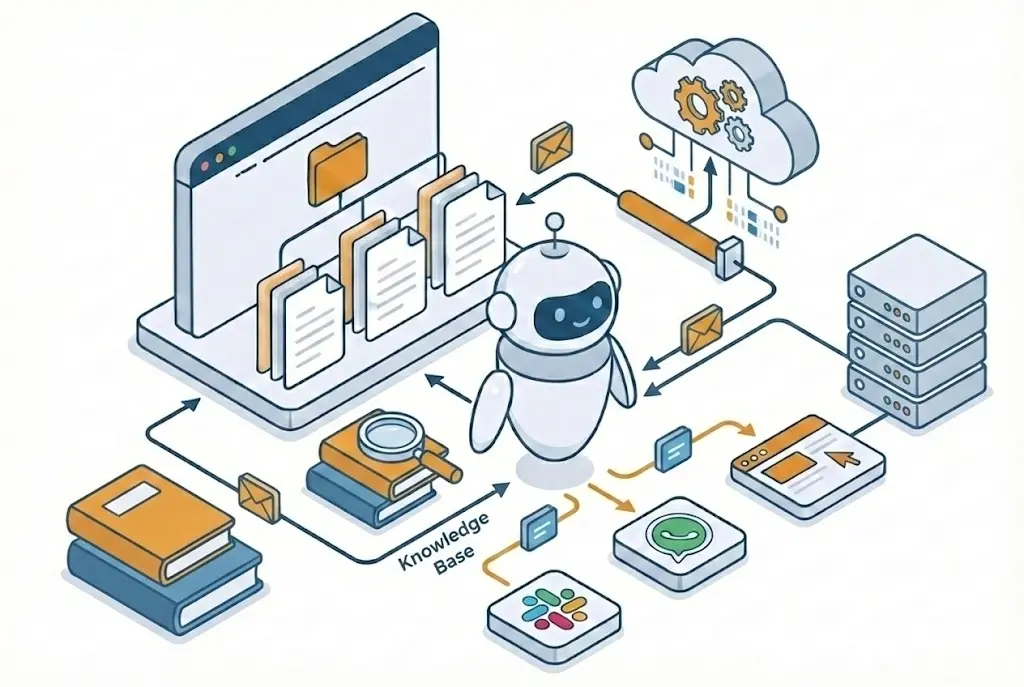
Agentic Knowledge Assistant
An LLM-powered, multi-channel assistant that uses Retrieval-Augmented Generation (RAG) to autonomously answer employee o...

Autonomous Content-to-Learning Engine
An AI system that ingests PDFs, videos, or documents and autonomously creates assessments, flashcards, and learning summ...
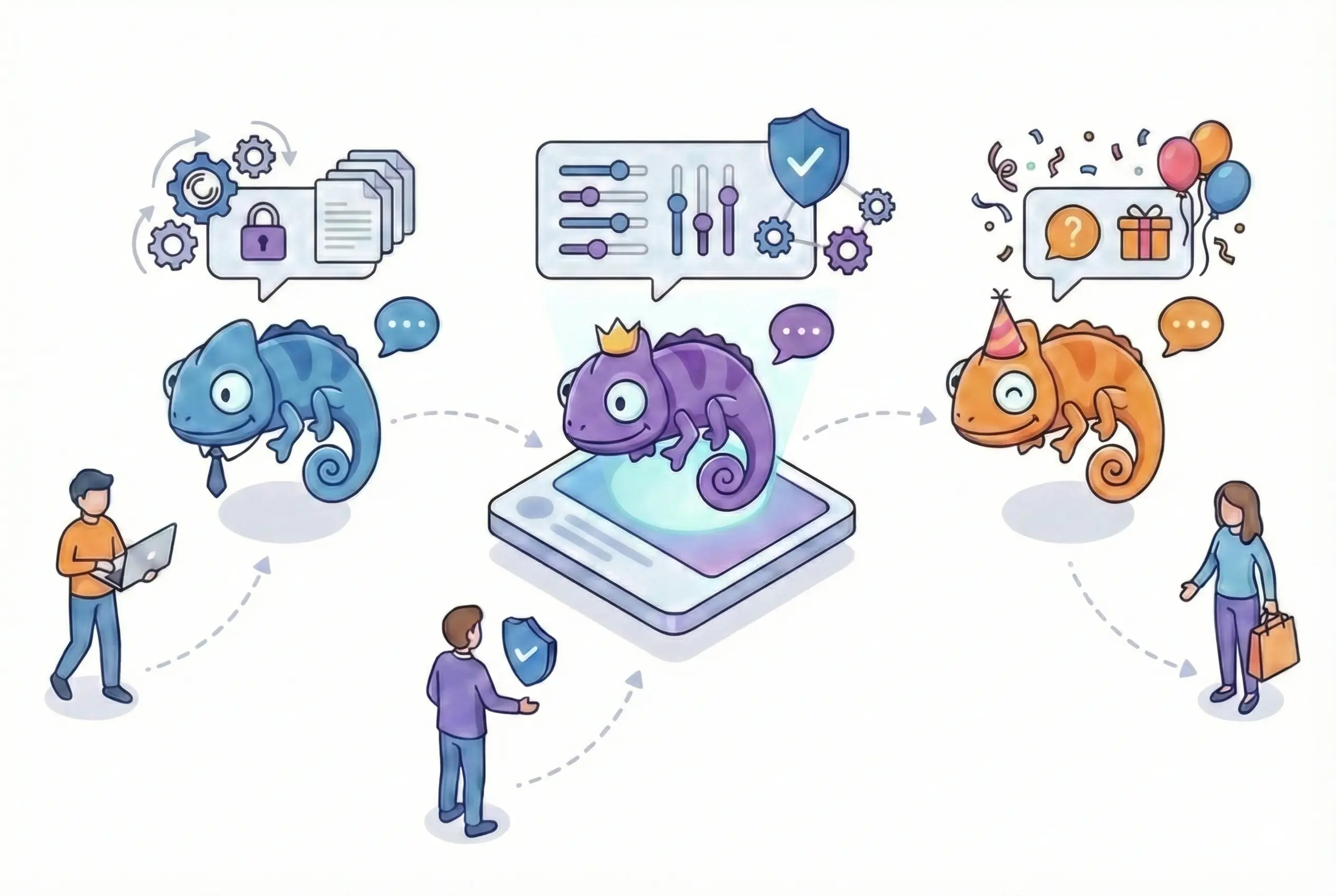
Embeddable Role-Aware Chat Widget
A lightweight AI widget that plugs into any platform and adapts answers dynamically based on user role and platform cont...